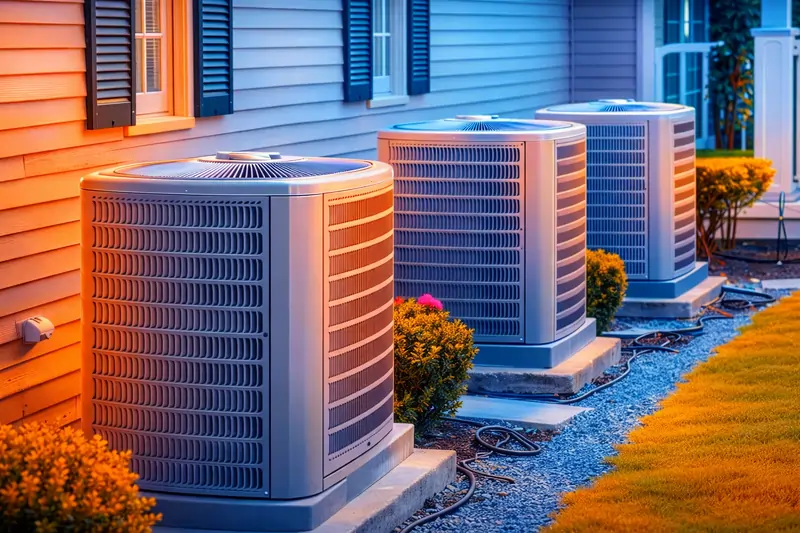
Dedicated Outdoor Air Systems in Raleigh, NC

Dedicated Outdoor Air Systems in Raleigh, NC

A dedicated outdoor air system, or DOAS, separates the ventilation function from the heating and cooling function in a commercial building. Rather than relying on recirculating air handlers to meet ventilation requirements, a DOAS unit brings in and conditions 100% outside air before delivering it to occupied spaces. This approach gives you precise control over ventilation rates, dramatically better indoor air quality, and a pathway to ASHRAE 62.1 compliance that recirculating systems struggle to match consistently. Considering an upgrade? Carolina Commercial Systems designs and installs DOAS units in Raleigh for office buildings, medical facilities, schools, and multi-tenant commercial properties where ventilation performance and occupant health are priorities. Contact us today to learn more.

How a Dedicated Outdoor Air System Works

A DOAS unit draws in outdoor air, filters it, conditions it to a neutral delivery temperature—distributing it independently of the primary cooling and heating system. Many configurations also include an energy recovery ventilator that captures heat or coolness from outgoing exhaust air to precondition incoming outdoor air, reducing the energy penalty of bringing in 100% outside air in North Carolina’s climate. The primary cooling and heating system then handles only the sensible load in each zone, which allows it to be right-sized for that job rather than compromised by ventilation demands. Our design-build team integrates DOAS into new construction and retrofit projects, selecting equipment and designing distribution to match the building’s ventilation loads and layout.

DOAS Matters for Compliance and Occupant Health—Here’s What to Know

ASHRAE Standard 62.1 sets the minimum ventilation rates for acceptable indoor air quality in commercial buildings—and conventional recirculating systems frequently fall short of those rates when demand control ventilation is misapplied or when occupancy patterns change. A properly designed DOAS eliminates most of those compliance risks by treating ventilation as a dedicated, measurable function rather than a byproduct of cooling and heating operation. Explore our commercial ventilation services to see how DOAS fits into a broader indoor air quality strategy.

DOAS Challenges We Help Commercial Buildings Solve

DOAS installations and retrofits come with specific design and operational challenges. Here are three we work through regularly with building owners and facility managers.

Conditioning humid outdoor air to a low dew point delivery temperature is the central challenge of DOAS design in the Southeast. Units that are not properly sized for latent load shift humidity control burden back onto the zone systems, which are not designed for it. We specify equipment with dedicated dehumidification capability and design delivery conditions that match the building’s sensible-to-latent load ratio.

Retrofitting a DOAS into a building that already has VAV boxes, fan coil units, or VRF systems requires careful coordination of delivery air conditions and distribution pressures. A DOAS that delivers air at the wrong temperature or pressure will interfere with zone equipment performance rather than complementing it. We evaluate the existing zone system before specifying the DOAS to ensure the two work together as a coordinated system.

A DOAS without demand-controlled ventilation runs at full outdoor air rate regardless of actual occupancy; which wastes energy during low-occupancy periods and can create over-pressurization issues in some building configurations. We integrate CO2-based demand control ventilation with DOAS installations where occupancy patterns warrant it, so the system modulates outdoor air delivery to match actual occupant load rather than design-day assumptions.

Regularly Scheduled Commercial HVAC Maintenance

Keep your commercial HVAC systems running efficiently year-round with scheduled maintenance tailored to your facility. Reduce downtime, control energy costs, and extend equipment life.

Areas We Service

  • Raleigh
  • Apex
  • Cary
  • Durham
  • Greenville
  • Holly Springs
  • Morrisville
  • Garner
  • Rolesville
  • Wake & surrounding counties
  • Clayton

Areas We Service

  • Raleigh
  • Apex
  • Cary
  • Durham
  • Greenville
  • Holly Springs
  • Morrisville
  • Garner
  • Rolesville
  • Wake & surrounding counties
  • Clayton

Carolina Commercial Systems: Your Raleigh DOAS Installation and Service Experts
  • What types of buildings benefit most from a dedicated outdoor air system? Medical and dental offices, laboratories, schools, high-occupancy office buildings, and restaurants see the greatest benefit. But really, benefit can be found anywhere that ventilation demand is high, variable, or subject to regulatory requirements that a conventional recirculating system cannot reliably meet.
  • Does a DOAS replace the existing cooling and heating system? No. A DOAS handles ventilation, while the existing zone equipment handles sensible heating and cooling. The two systems work together, each doing what it is designed for.
  • How does energy recovery work in a DOAS installation? An energy recovery ventilator transfers heat and moisture between outgoing exhaust air and incoming outdoor air, reducing the conditioning load by 50 to 80 percent depending on conditions. This largely offsets the energy cost of bringing in 100 percent outside air.
  • Can a DOAS be retrofitted into an existing building? Yes, though it requires careful coordination with the existing zone equipment. We evaluate the existing system before specifying the DOAS to ensure delivery air conditions and distribution pressures work together rather than interfering with each other.
  • How do you verify that a DOAS is meeting ASHRAE 62.1 ventilation requirements? We commission the system to confirm measured outdoor air delivery matches design intent, and we can configure CO2-based demand control ventilation to modulate outdoor air to actual occupancy rather than design-day assumptions.

The most common objection to DOAS is the energy cost of conditioning 100% outside air; which is a legitimate concern in a climate with North Carolina’s humidity levels. Energy recovery ventilators address that directly by transferring heat and moisture between outgoing exhaust air and incoming outdoor air, reducing the conditioning load by 50 to 80 percent depending on conditions. This means that the net energy impact of a well-designed DOAS with energy recovery is typically lower than a poorly performing conventional system that is simultaneously over-ventilating some zones and under-ventilating others. Our applied services team can model the energy impact for your specific building before you commit to a design.

Persistent occupant complaints about stuffiness or odors that do not resolve with thermostat adjustments, measured CO2 levels above 1,100 ppm in occupied spaces, humidity that stays high on mild days when the cooling system is not running hard, condensation on windows or interior surfaces, and an uptick in occupant health complaints or absenteeism are all indicators that your building is not getting adequate outside air. A ventilation audit will determine whether the issue is equipment capacity, controls configuration, or distribution—and a DOAS may be the right long-term solution. Our commercial air filtration services complement DOAS installations where particulate and pathogen control is also a priority.

Whether you are designing a new building, retrofitting an existing one, or responding to regulatory pressure on ventilation compliance, Carolina Commercial Systems can help you evaluate whether a dedicated outdoor air system is the right solution, and design one that fits your building’s layout and load profile. We serve Raleigh, Durham, Cary, Chapel Hill, Wake Forest, and the Triangle region. Call (919) 872-3913 to start the conversation.

Subservices

  • Commercial Air Duct Repair

  • Commercial Duct Fabrication

  • Commercial Mini Split Repair

  • Commercial Heat Pump Install

Get In Touch