Ductwork Material Selection Guide
January 22, 2026
A Guide to the Major Components of Your Heating System
February 16, 2026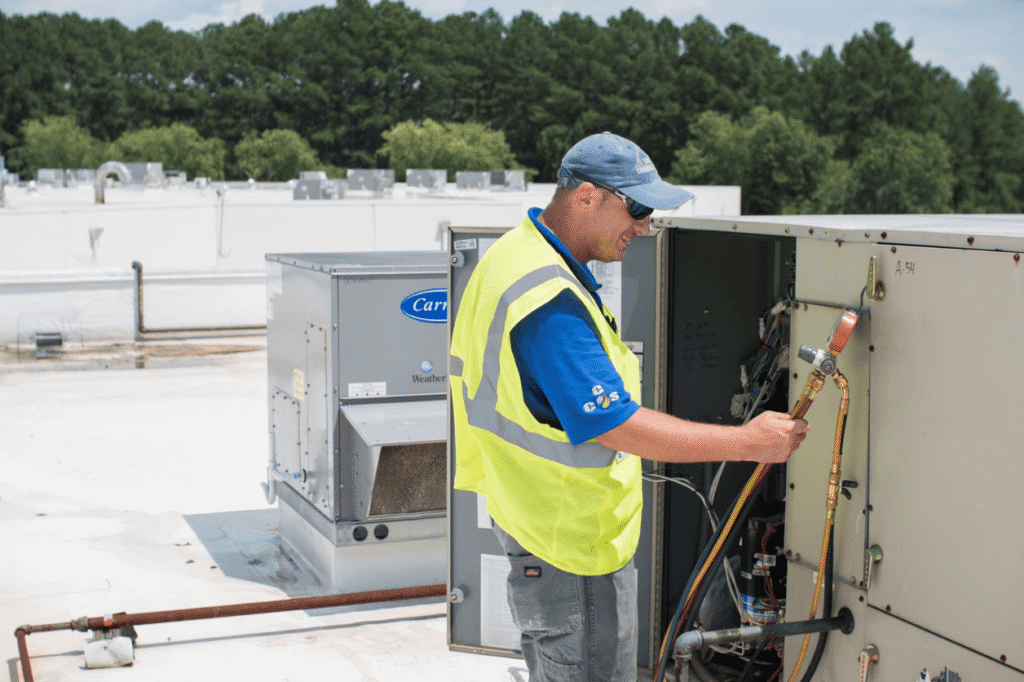
Spring is a smart time to service your HVAC system
A spring HVAC tune-up is the simplest way to make sure your air conditioner is ready for the season ahead – before the first real heat wave hits and everyone else is calling at the same time. Whether you’re a homeowner trying to keep your family comfortable or a facility manager juggling tenants, employees, and budgets, a spring maintenance visit is an investment that typically pays back in fewer surprises, better efficiency, and longer equipment life.
Below is what a spring tune-up actually does, why it matters in Raleigh specifically, and how to tell when your system needs attention.
What a Spring HVAC Tune-Up Really Means
A spring tune-up is preventive maintenance for your cooling system. It’s not just a quick filter swap (though that’s important). A proper tune-up is a structured inspection, cleaning, and performance test designed to catch small problems before they become expensive breakdowns.
In Raleigh’s springtime, tune-ups matter even more because the weather transitions so quickly. Your system may not get a gentle ramp-up. It can go from barely running to long cycles practically overnight.
Raleigh is a unique HVAC environment because of three very real factors:
- Pollen season is not subtle: High pollen doesn’t just bother allergies. It also increases the burden on your HVAC filtration and can accelerate coil and blower contamination if filters are neglected.
- Humidity climbs early: Even when it’s not blazing hot, Raleigh can get sticky. Your AC doesn’t just cool – it dehumidifies. If the system isn’t tuned correctly (refrigerant charge, airflow, coil condition), you can end up with a home or office that feels clammy even at the “right” temperature.
- Long cooling season: In North Carolina, cooling season is a marathon, not a sprint. The better shape your system is in at the start, the better it tends to perform throughout the summer.
What’s Included in a Proper Spring Tune-Up?
A thorough spring HVAC tune-up should include a combination of safety checks, cleaning, adjustments, and performance measurements. Here’s what we typically focus on for both residential and commercial systems:
Airflow and filtration
- Inspect air filter condition and sizing
- Check return and supply airflow for restrictions
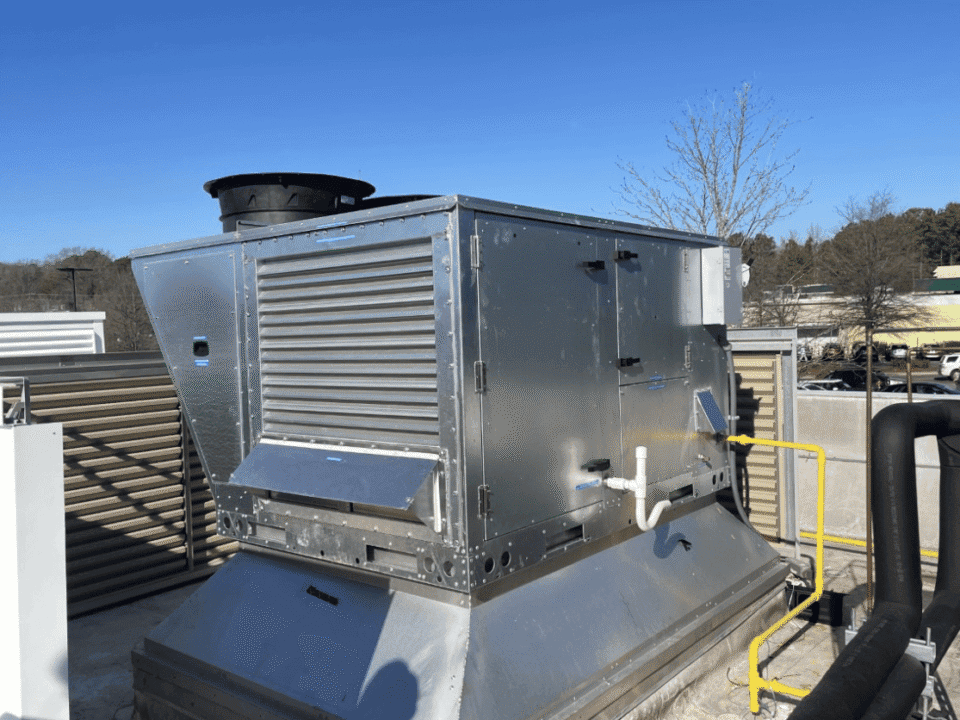
- Look for duct leakage signs (commercial: check for obvious disconnects at rooftop curb transitions)
Poor airflow can cause icing, reduced capacity, higher energy bills, and premature compressor wear. It also affects humidity control.
Outdoor condenser coil inspection and cleaning
- Inspect the outdoor unit for debris, grass clippings, cottonwood, and pollen buildup
- Clean the condenser coil as needed
- Confirm the condenser fan motor and blade are operating properly
The outdoor coil is where your system dumps heat. If it’s dirty, your AC has to work harder, run longer, and operate at higher pressures.
Electrical system and controls
- Tighten electrical connections
- Check capacitor and contactor health
- Inspect wiring condition
- Confirm thermostat operation and calibration (commercial: confirm control sequences and schedules if applicable)
Electrical components are common failure points in the summer. Catching a weak capacitor in April is a lot better than losing cooling in July.
Refrigerant charge and system pressures (as appropriate)
- Measure refrigerant pressures and temperature split
- Look for signs of refrigerant leaks (oil residue, low performance, abnormal readings)
- Confirm the system is operating within manufacturer specs
An undercharged system can freeze up and fail to cool; an overcharged system can stress the compressor. Either way, efficiency suffers.
Condensate drain and humidity-related components
- Clear and test condensate drain line
- Inspect drain pan and safety switches
- Check for signs of overflow risk
- Commercial: inspect drain routing and traps where applicable
A clogged drain line can cause water damage, musty smells, and system shutdowns.
Indoor coil, blower, and overall system cleanliness
- Inspect evaporator coil condition (cleanliness, icing signs)
- Inspect blower wheel and housing
- Look for excessive dust buildup that reduces airflow
The indoor side of the system has a huge impact on comfort and efficiency. A dirty blower wheel can quietly reduce airflow without anyone noticing until the system starts struggling.
Overall performance test
- Measure temperature differential (supply vs. return)
- Check cycling behavior and runtime patterns
- Identify abnormal sounds, vibrations, or airflow noise
A tune-up isn’t complete without verifying performance. The goal is not just “it turns on,” but “it’s operating correctly.”
Residential: Signs You Should Schedule a Spring Tune-Up ASAP
Even if your system “seems fine,” small signals often point to developing issues. You should consider a tune-up if you notice:
- Your AC takes longer than normal to cool the home
- Some rooms are warmer than others
- You feel sticky indoors even at a normal thermostat setting
- You hear rattling, buzzing, or squealing when the system runs
- Your energy bills started creeping up last summer
- You can’t remember the last time the outdoor unit was cleaned
- Allergy symptoms spike indoors (filtration or coil cleanliness can play a role)
If your system is 8+ years old, regular maintenance matters even more. Older systems can run well for years, but only if they’re kept clean and operating within spec.
Commercial: Why Tune-Ups Protect Comfort, Productivity, and Budgets
When cooling goes down in a workspace, it can lead to uncomfortable employees and reduced productivity, loss of customers, equipment overheating, and emergency repairs. Spring maintenance helps commercial properties by:
- Reducing downtime risk in peak season: Summer is the busiest time for HVAC. A spring tune-up helps you avoid emergency calls when everyone else is calling too.
- Improving energy performance: Dirty coils, failing capacitors, or incorrect schedules can quietly increase energy use. Even small efficiency gains across multiple units can add up.
- Supporting compliance and planning: Many businesses have internal requirements for maintenance documentation, and tune-ups provide a record of condition and recommended repairs.
- Extending equipment life: Rooftop units and split systems are expensive. Preventive care can reduce compressor stress, keep pressures in range, and prevent secondary damage from minor issues.
The Cost of Skipping Maintenance
We see a predictable pattern every year:
- Mild spring weather arrives; systems sit.
- The first heat wave hits.
- Units that weren’t maintained suddenly run long cycles.
- Weak parts fail: capacitors, contactors, drain issues, blower problems.
- People wait longer for service because it’s peak season.
Maintenance doesn’t eliminate all failures – nothing does – but it dramatically reduces the odds of being the person searching for “emergency HVAC repair near me” during the hottest week of summer.
A Tune-Up Also Helps You Decide: Repair or Replace?
Spring is the perfect time to evaluate whether your current system is worth keeping for another season. During a tune-up, you can get real insight into:
- System efficiency and performance
- Component health
- Signs of refrigerant leaks or coil deterioration
- Whether small upgrades (like a better thermostat or improved filtration) would help
For homeowners, this is especially useful before you spend money on a major repair mid-summer. For businesses, it supports budgeting and capital planning, especially if you manage multiple units and want to avoid surprise replacements.
How Often Should You Tune Up Your HVAC?
A good rule of thumb:
- Residential: twice a year (spring for cooling, fall for heating)
- Commercial: at least twice a year, often quarterly depending on building type, usage, and equipment count
If your building has critical loads (server rooms, healthcare spaces, high-occupancy retail), more frequent inspections can be worth it.
Get Ahead of Summer with a Spring HVAC Tune-up
The goal of a Spring HVAC tune-up is simple: start the season with a system that’s clean, properly adjusted, and ready for Raleigh’s heat and humidity. Contact us today to schedule your next maintenance appointment.